
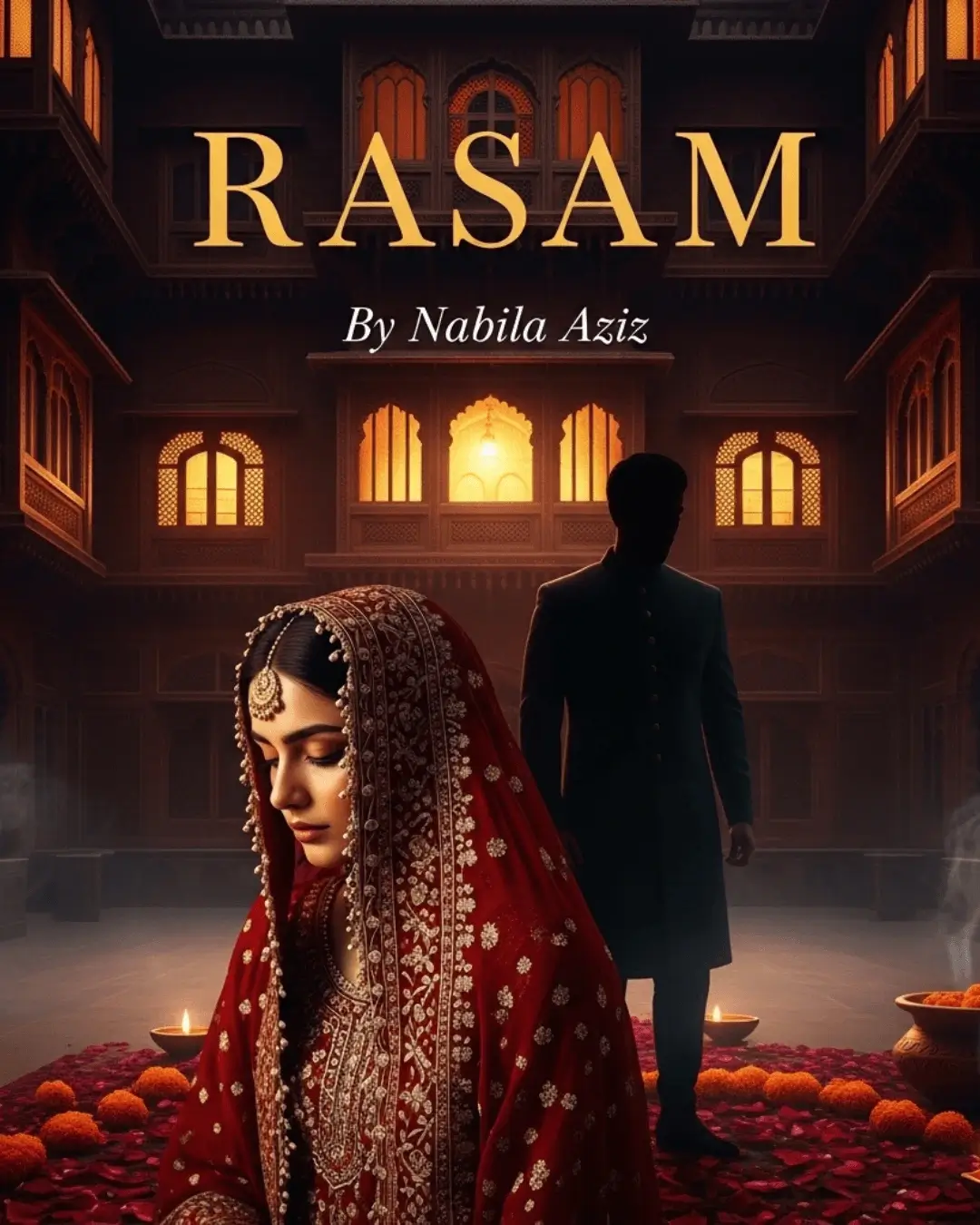
| Novel Name | Rasam |
| Author Name | Nabila Aziz |
| File Size | 5.10 MB |
| File Format | PDF Format |
| Pages | 39 |
| Download Option | Available |
Rasam by Nabila Aziz — a powerful Urdu novel about blind traditions, a silent girl, and the man who dared to challenge it all. Full summary, characters, and themes.
Rasam Novel Summary:
Nabila Aziz is one of Pakistan’s most respected Urdu fiction writers, known for novels published across Kiran Digest, Khawateen Digest, and Shuaa Digest. Her writing tackles real social issues — feudal systems, forced customs, blind tradition — without losing the emotional warmth readers love.
Rasam (meaning “custom” or “ritual”) was published in Kiran Digest, March 2010 and is 35 pages long. It’s a short but powerful novel built around one central question: what happens when society’s unwritten rules collide with a person’s right to live freely and love honestly?
Characters:
Sheher Bano:
The female lead. She comes from a noble family and has spent her whole life being the perfect, obedient daughter — never speaking up, never questioning, always following orders. She’s shy and soft-spoken on the surface, but underneath there’s a deep emotional intelligence and quiet strength. Her journey in this novel is about finding her voice — and realizing that blind obedience isn’t the same as honor.
Haroon:
The male lead. Bold, modern, and completely allergic to injustice. Haroon is the kind of man who can’t just stand by when something is wrong — he acts. He respects tradition, but he refuses to let harmful customs go unchallenged. His character is a direct contrast to Sheher Bano’s world — and that tension between them is what drives the story forward. His emotional growth is real and satisfying.
Supporting Characters:
Nabila Aziz builds a rich social world around her leads. Family elders, community figures, and feudal system gatekeepers all play a role. Some protect the customs blindly. Others quietly question them. Together they represent the social pressure that Sheher Bano has been living under her entire life.
Plot Overview:
Sheher Bano has never made a decision for herself. Every choice — what to wear, who to talk to, who to marry — has been made for her by her family and the customs they follow without question. She hasn’t rebelled. She doesn’t know how. But she’s also never truly been happy, and deep down, she knows something is missing.
Haroon enters Sheher Bano’s life and immediately disrupts the carefully arranged order around her. He’s not rude — he’s just real. He sees her as a person, not a role to fill. He questions the customs others treat as sacred. And for the first time, Sheher Bano meets someone who thinks she deserves better than what she’s been given.
The heart of the novel revolves around a fake religious ritual or ceremony — a “rasam” being used to control people’s actions and decisions. Someone with power is exploiting people’s beliefs and using fake customs to manipulate those around them. Haroon sees through it immediately. Sheher Bano, raised to never question such things, has a harder time processing what’s right in front of her.
The novel makes a sharp distinction between genuine faith and blind obedience. Haroon’s message — and Nabila Aziz’s core message — is that true belief in God means using your mind, not surrendering it to people who exploit traditions for power. Sheher Bano must decide: keep following, or start thinking for herself.
The story builds to a moment where Sheher Bano can no longer stay silent. Haroon’s courage and his refusal to let injustice slide becomes the spark that finally wakes something in her. Readers noted this section as both funny and deeply moving because Sheher Bano’s awakening doesn’t come dramatically. It comes quietly, the way real change usually does.
The novel’s after-marriage arc shows what happens when two people choose each other not out of obligation, but out of genuine understanding. Haroon doesn’t fix Sheher Bano — she fixes herself. He just gives her room to do it. Their relationship becomes a quiet example of what healthy love inside a marriage actually looks like.
You may also read: Mohabbat Ho Gai Hai Urdu Novel by Mirha Shah.
Novel Themes:
- Blind tradition vs. real faith — The novel’s sharpest message: following customs without thinking isn’t piety — it’s weakness. True faith requires your mind, not just your compliance.
- Women’s courage and voice — Sheher Bano’s journey from silence to self-expression is the emotional core of the novel. Nabila Aziz shows that real strength isn’t loudness — it’s the quiet decision to stop accepting less than you deserve.
- The feudal system — Power structures that use tradition as a weapon appear throughout the story. The novel doesn’t shy away from criticizing systems that keep people, especially women trapped.
- Love and mutual respect — Haroon and Sheher Bano’s relationship is built on understanding, not control. Their dynamic is a quiet argument for what marriage should actually feel like.
- Forgiveness and healing — Once the fake customs are exposed and the truth comes out, the story moves into a space of repair — showing that honest relationships can survive difficult discoveries.
Conclusion:
Rasam is short but it hits hard. In just 35 pages, Nabila Aziz manages to take on the feudal system, fake religious customs, women’s silence, and the nature of true faith — all inside a love story that feels completely real. Sheher Bano starts the novel as someone who follows every rule without question.
By the end, she’s someone who finally understands the difference between a rule worth keeping and one worth breaking. Haroon doesn’t save her — he just shows her she was always capable of saving herself. That’s the real rasam worth following.
Most demanded amazing Urdu novels: