
Introduction
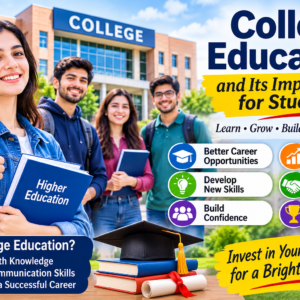
College education is an important stage in a student’s academic and personal development. It provides opportunities to gain specialized knowledge, develop practical skills, explore career options, and prepare for the challenges of modern society. In an increasingly competitive world, higher education can help students build confidence, improve their qualifications, and pursue a wide range of professional opportunities.
For many students, attending college is the first step toward achieving long-term educational and career goals. College offers more than classroom instruction. It also encourages independent thinking, communication, problem-solving, teamwork, and personal responsibility. These abilities can be valuable in professional environments as well as everyday life.
However, choosing a college requires careful planning. Students should consider academic programs, tuition fees, scholarships, campus facilities, teaching quality, and career support before making a decision. Understanding the importance of college education can help students and families make informed choices about the future.
What Is College Education?
College education refers to advanced learning that students pursue after completing secondary school or an equivalent level of education. Depending on the country and institution, colleges may offer undergraduate degrees, diplomas, certificates, technical qualifications, and professional training programs.
Unlike basic schooling, college education often allows students to concentrate on a specific subject or career field. Students may study business administration, computer science, engineering, education, healthcare, arts, social sciences, or other disciplines.
College programs combine theoretical knowledge with practical learning activities. These may include laboratory work, research projects, presentations, internships, group assignments, and industry placements.
The structure and duration of a program depend on the qualification and institution. Before enrolling, students should verify that the college and program are appropriately recognized and meet the requirements of their intended career.
1. Developing Knowledge and Academic Skills
One of the most important benefits of college education is the opportunity to gain in-depth knowledge. Students study subjects that interest them and develop a better understanding of their chosen fields.
College encourages learners to analyze information, evaluate evidence, conduct research, and communicate ideas clearly. These academic skills help students approach problems systematically instead of relying only on memorization.
For example, a computer science student may learn programming, databases, and software development. A business student may study accounting, marketing, economics, and management. An education student may explore teaching methods, learning theories, and classroom management.
This specialized knowledge can provide a foundation for future employment, professional training, and further education.
2. Improving Career Opportunities
College education can help students qualify for occupations that require specific academic credentials or technical expertise. Many professional roles require applicants to hold a recognized degree, diploma, or specialized qualification.
Graduates may pursue careers in education, technology, finance, healthcare, engineering, public service, communications, and many other industries. Their opportunities depend on their qualifications, experience, location, and the requirements of employers.
A college qualification does not guarantee employment or a particular salary. However, combining education with practical experience, professional networking, and relevant skills can strengthen a graduate’s position in the job market.
Students should research career pathways before selecting a program. Understanding typical job responsibilities and qualification requirements can help them choose a course that supports their long-term ambitions.
3. Building Communication and Social Skills
Communication is essential in almost every profession. College gives students opportunities to improve their written, verbal, and interpersonal communication skills through presentations, discussions, group projects, and academic assignments.
Working with classmates also teaches students how to share ideas, listen to different perspectives, resolve disagreements, and cooperate toward common goals.
These experiences can improve confidence and prepare students to communicate effectively with colleagues, supervisors, customers, and other professionals.
Students may also develop friendships and professional connections with people from different backgrounds. These relationships can broaden their perspectives and help them understand different cultures, experiences, and ways of thinking.
4. Encouraging Independent Thinking
College education encourages students to become more independent and responsible for their learning. Instead of depending entirely on teachers for information, students are often expected to conduct research, complete assignments, manage deadlines, and evaluate different arguments.
This process helps learners develop critical thinking and decision-making abilities.
For example, a student researching an environmental issue may need to compare scientific studies, assess the reliability of sources, and explain the evidence supporting a conclusion.
Such experiences teach students to distinguish reliable information from unsupported claims. Independent thinking is useful in academic work, professional decision-making, and everyday situations where careful judgment is necessary.
5. Developing Practical and Technical Skills
Modern employers often value practical abilities alongside academic qualifications. Many college programs include activities that allow students to apply what they learn to real-world situations.
Depending on the field, these activities may include laboratory experiments, coding projects, business simulations, teaching practice, design assignments, research work, or internships.
Technical education can help students develop specialized competencies relevant to their intended careers. For instance, information technology students may gain experience with programming tools, networking systems, or cybersecurity concepts.
Practical learning can also help students identify their strengths and discover which areas they need to improve before entering the workforce.
6. Understanding Financial Responsibility
College education can teach students valuable lessons about financial planning and responsibility. Many learners must manage tuition payments, transportation costs, study materials, accommodation, and everyday expenses.
Creating a budget helps students understand how to prioritize spending and plan for future needs. Students who manage their own expenses may become more aware of the relationship between income, savings, and financial decisions.
Before enrolling, students and families should calculate the total cost of education rather than considering tuition fees alone.
Scholarships, grants, financial aid, and payment plans may help eligible students manage expenses. Students should research these options early and verify the eligibility conditions for each opportunity.
7. Access to Scholarships and Financial Aid
Financial barriers can prevent talented students from pursuing higher education. Scholarships and other forms of assistance can make college more accessible by reducing some of the costs associated with studying.
Scholarships may be awarded based on academic performance, financial need, leadership, community involvement, athletic achievement, or a specific field of study.
Some colleges offer institutional awards, while government agencies, charities, foundations, and private organizations may provide external funding.
Students interested in scholarships should review official application requirements, deadlines, and supporting document requirements. They may need academic transcripts, recommendation letters, personal statements, or proof of financial circumstances.
It is important to remember that scholarships are competitive and not every applicant will receive funding. Applying to several suitable opportunities can help students explore more options.
8. Promoting Personal Growth and Confidence
College is an opportunity for students to discover their interests, develop new abilities, and become more confident in their decisions.
Participating in student organizations, academic competitions, volunteer activities, sports, and cultural events can help students explore interests beyond their academic subjects.
These experiences may improve leadership, organization, teamwork, and public speaking skills.
College can also teach students how to respond to challenges. Managing difficult assignments, preparing for examinations, and adapting to new responsibilities can help learners become more persistent and flexible.
Personal growth takes time, and every student’s experience is different. Students can benefit by seeking support when needed and maintaining a healthy balance between academic responsibilities and personal well-being.
9. Expanding Professional Networks
Building professional relationships is another potential benefit of college education. Students may meet teachers, academic advisers, classmates, industry professionals, and employers through their educational experiences.
These connections can provide guidance about careers, internships, research projects, and further study.
Students can strengthen their networks by attending career events, participating in relevant organizations, contacting academic advisers, and maintaining professional relationships with people they meet.
Professional networking should focus on genuine communication and mutual respect. It is not simply about collecting contacts; it is about learning from others and building relationships that may support future development.
10. Supporting Innovation and Entrepreneurship
College can provide students with knowledge and skills that help them develop new ideas and establish businesses. Courses in business, technology, design, economics, and management may introduce learners to planning, budgeting, marketing, and problem-solving.
Some institutions also provide entrepreneurship clubs, business competitions, startup support, research facilities, or mentoring opportunities.
Students interested in starting a business can use these resources to explore market needs, develop products, test ideas, and understand the challenges of running an organization.
Although a college degree does not guarantee entrepreneurial success, education can help aspiring business owners make better-informed decisions and develop a stronger foundation for their projects.
How to Choose the Right College
Selecting a college is a significant decision that should be based on academic goals, financial circumstances, and personal needs.
Review academic programs: Choose an institution that offers a suitable program with relevant courses and learning opportunities.
Check recognition and accreditation: Verify the college’s official status and whether the qualification is accepted for your intended career or further study.
Compare tuition and expenses: Consider tuition, accommodation, transportation, books, and other costs.
Explore scholarships: Investigate available financial assistance and check application deadlines.
Evaluate campus resources: Look for libraries, laboratories, academic advising, career services, and student support.
Research career preparation: Consider internships, practical projects, industry partnerships, and graduate support services.
Consider location and learning format: Decide whether an on-campus, online, or hybrid program best meets your circumstances.
Students should compare several institutions and review official information before making their final decision.
Challenges Students May Face in College
Although college education offers many benefits, students may encounter challenges during their studies.
Financial pressure can make it difficult to cover educational expenses. Academic workloads may also require careful time management, particularly when students balance classes with employment or family responsibilities.
Some students struggle with adjusting to a new environment, preparing for examinations, or meeting demanding assignment deadlines.
To address these challenges, students can create realistic study schedules, seek help from teachers, use academic support services, and communicate with financial aid offices when necessary.
Maintaining a balanced routine, getting sufficient rest, and building supportive relationships can also contribute to a better educational experience.
Seeking assistance early is often more effective than waiting until a problem becomes difficult to manage.
The Future of College Education
College education continues to evolve as technology, employment requirements, and learning preferences change. Online courses, digital libraries, virtual classrooms, and collaborative learning platforms have expanded access to educational resources.
Many institutions also emphasize practical experience, digital literacy, research, communication, and lifelong learning.
Students may need to update their knowledge throughout their careers as industries introduce new tools and methods. Developing a habit of continuous learning can help graduates adapt to changing professional expectations.
When choosing a college, students should consider whether the institution provides relevant resources, practical learning opportunities, and support for future development.
Conclusion
College education can play a valuable role in academic achievement, professional preparation, and personal development. It helps students gain specialized knowledge, strengthen communication skills, develop independent thinking, and explore potential career pathways.
It can also provide opportunities to build professional networks, participate in practical projects, access scholarships, and develop entrepreneurial abilities. However, the benefits students receive depend on their chosen program, individual effort, available resources, and career goals.
Before enrolling, students should carefully compare colleges, verify institutional recognition, review program requirements, and prepare a realistic financial plan.
By making informed decisions and taking advantage of available learning opportunities, students can use college education as a foundation for continued growth and a more confident future.
Frequently Asked Questions
Why is college education important?
College education can provide specialized knowledge, practical skills, professional qualifications, and opportunities for personal growth. It may also help students prepare for careers that require formal education.
Does a college degree guarantee a good job?
No. Employment depends on several factors, including qualifications, practical experience, skills, location, and employer requirements. A degree can help prepare students, but it cannot guarantee a particular job or salary.
Can students attend college with limited financial resources?
Potentially, yes. Eligible students may explore scholarships, grants, financial aid, payment plans, and affordable educational institutions. Availability depends on individual circumstances and the programs offered.
How should students choose a college?
Students should compare academic programs, recognition, costs, scholarships, campus resources, learning formats, and career preparation opportunities before making a decision.
What skills can students develop in college?
Students may develop research, communication, teamwork, critical thinking, time management, problem-solving, and subject-specific technical skills.
Is online college education useful?
Online education can provide flexibility and access to learning resources. Students should verify institutional recognition, course quality, student support, and whether the qualification meets their career requirements.